
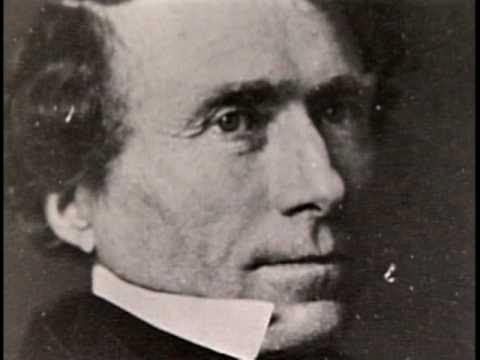
The Doughface President: Franklin Pierce and His Era

mistressesanonymous.com – Franklin Pierce, the 14th President of the United States, is often described as the “Doughface” president—an unflattering label that reflects his reputation as a leader who was seen as malleable and accommodating to Southern interests. His presidency, which lasted from 1853 to 1857, unfolded during a volatile period in American history, one marked by rising tensions between North and South over the issue of slavery, territorial expansion, and the future of the Union. Pierce, a Northern Democrat with Southern sympathies, found himself navigating these tumultuous waters, and his political decisions would ultimately contribute to the deepening divides that led to the Civil War.

This article explores Franklin Pierce’s presidency, examining how his personal background, political ideology, and policies led to his reputation as the “Doughface President” and how his era reflects the broader struggles of the United States during the antebellum period. From his controversial support for the Kansas-Nebraska Act to his failure to address the growing sectional divide, Pierce’s presidency serves as a cautionary tale about the fragility of national unity in a nation on the brink of civil conflict.

Early Life and Political Beginnings

The Making of a “Doughface”

Franklin Pierce was born on November 23, 1804, in Hillsborough, New Hampshire, into a politically connected family. His father, Benjamin Pierce, was a Revolutionary War hero and a prominent politician, serving as the governor of New Hampshire. From an early age, Franklin was exposed to politics, but his early life was also marked by personal tragedy. The death of his younger brother, who was Franklin’s closest companion, had a profound emotional impact on him.

Pierce attended Bowdoin College and graduated in 1824, after which he studied law and began practicing in Concord, New Hampshire. His early political career began when he was elected to the New Hampshire legislature at age 23. He later served in the U.S. House of Representatives from 1833 to 1837, where he was a loyal Democrat and a supporter of President Andrew Jackson’s policies.

During his time in the House, Pierce’s political views remained largely moderate. Though he was sympathetic to the Southern cause, he was not as committed to slavery as many of his Southern counterparts. This moderation would become a defining characteristic of his career. After his tenure in the House, Pierce was elected to the U.S. Senate, where he continued to align himself with Jacksonian Democrats. However, his Senate career was short-lived, and he resigned in 1842, largely due to his declining political influence and personal tragedies, such as the death of his son.

The Mexican-American War and Pierce’s Rise to National Prominence

Pierce’s military service during the Mexican-American War of 1846-1848 provided him with an opportunity to reinvent himself as a national figure. Although he lacked military experience, Pierce volunteered as a brigadier general. He served in several campaigns and earned a reputation for his bravery, although he was seriously wounded during the Battle of Cerro Gordo. His war record, however, was not particularly distinguished, and his post-war career was marked by personal grief, particularly the death of his beloved son, Benjamin.

Despite these personal hardships, Pierce’s reputation as a war hero helped elevate him within the Democratic Party. By the early 1850s, he had regained his political standing, positioning himself as a possible candidate for higher office. His military service and the aura of a war hero helped bolster his political career, and by 1852, Franklin Pierce had emerged as a compromise candidate for the presidency.

The 1852 Election and Pierce’s Political Ideology

The Democratic Nomination

The Democratic Party in the early 1850s was deeply divided along sectional lines, torn between Northern Democrats who were generally opposed to the expansion of slavery and Southern Democrats who were committed to defending the institution of slavery. In the 1852 Democratic National Convention, the party’s leadership sought a candidate who could unite these factions. After multiple ballots and with no clear consensus emerging between more prominent candidates such as Senator Stephen A. Douglas and former President James Buchanan, the convention turned to Franklin Pierce as a compromise candidate. His moderate views on slavery and his reputation as a war hero made him a palatable choice for both Northern and Southern Democrats.

Although he had no strong convictions on the most pressing issues of the day—particularly slavery—Pierce’s political flexibility made him the ideal candidate for a divided party. His platform was vague, and his main appeal lay in his perceived ability to maintain peace between the North and South. The Democratic Party’s nomination of Pierce reflected the party’s growing willingness to accommodate Southern interests, even at the cost of alienating Northern abolitionists and free-soil Democrats.

The 1852 Presidential Campaign

Pierce’s presidential campaign was marked by his efforts to remain neutral on the issue of slavery, a strategy designed to avoid alienating either the North or South. His opponents, including Whig candidate Winfield Scott, attempted to portray Pierce as weak and indecisive, but his campaign emphasized his military record and his commitment to national unity. In the end, Pierce won the 1852 election in a landslide, securing 254 electoral votes to Scott’s 42. His victory reflected a national desire for stability and a return to business as usual, but it also masked the deepening sectional tensions that would soon tear the country apart.

The “Doughface” Presidency: A Northern Democrat with Southern Sympathies

The Kansas-Nebraska Act and Pierce’s Support for Slavery

Pierce’s presidency, however, quickly became defined by controversy and political missteps, most notably his support for the Kansas-Nebraska Act of 1854. This legislation, introduced by Senator Stephen A. Douglas, allowed the territories of Kansas and Nebraska to decide for themselves whether to permit slavery, effectively repealing the Missouri Compromise of 1820, which had prohibited slavery in the majority of the Western territories.

Pierce’s support for the Kansas-Nebraska Act was rooted in his desire to appease the South and maintain the Union, but the law inflamed Northern opposition and led to widespread violence in Kansas between pro-slavery and anti-slavery factions. This violent period, known as “Bleeding Kansas,” highlighted Pierce’s inability to prevent the growing divisions between North and South. His refusal to take a strong stance on slavery and his insistence on popular sovereignty alienated large segments of the Northern electorate.

The passage of the Kansas-Nebraska Act led to a realignment of political parties, with many Northern Democrats abandoning Pierce in favor of the newly formed Republican Party, which opposed the expansion of slavery into the territories. Pierce’s political enemies in the North began to label him a “Doughface”—a term used to describe a Northern Democrat who was perceived as weak and overly sympathetic to Southern interests. His support for the Kansas-Nebraska Act and his failure to address the violence and instability it caused in Kansas cemented his reputation as a president who was too accommodating to the South.

The Fugitive Slave Act and Further Controversy

Another source of controversy during Pierce’s presidency was his staunch support for the enforcement of the Fugitive Slave Act of 1850, which had been passed by Congress before he took office. The law required that runaway slaves be returned to their owners, even if they had fled to free states. This law was deeply unpopular in the North, where many saw it as a violation of personal liberty. However, Pierce, in his efforts to maintain Southern support, enforced the law vigorously.

The enforcement of the Fugitive Slave Act further alienated Northern Democrats and fueled the growing abolitionist movement. Northern states passed “personal liberty laws” to counteract the federal law, and tensions between free and slave states deepened. Pierce’s inability to navigate these tensions reflected his weakness as a leader, as his policies only exacerbated the divisions that were tearing the country apart.

The Collapse of the Whigs and the Rise of the Republican Party

One of the most significant outcomes of Pierce’s presidency was the collapse of the Whig Party, which had been the principal opposition to the Democrats. The Whigs, already divided over the issue of slavery, were further torn apart by the passage of the Kansas-Nebraska Act. Northern Whigs, who were opposed to the expansion of slavery, left the party in large numbers, and many of them joined the newly formed Republican Party, which emerged as the main anti-slavery party in the 1850s.

The Republican Party’s rise marked the beginning of the end for Pierce’s political influence. As a result of his pro-Southern policies and his failure to address the growing sectional crisis, Pierce found himself increasingly isolated, with little support from Northern abolitionists or Southern fire-eaters. By the time he left office in 1857, the Republican Party had firmly established itself as the main political force in the North, and Pierce’s political career was effectively over.

Conclusion: Franklin Pierce and the Legacy of a “Doughface” President

Franklin Pierce’s presidency was one of tragedy and missed opportunities, and his reputation as the “Doughface” president has endured in American history. His political ideology, characterized by a moderate stance on slavery and a willingness to accommodate Southern interests, proved to be disastrous in an era of rising sectionalism. His support for the Kansas-Nebraska Act, the enforcement of the Fugitive Slave Act, and his inability to prevent the violence and instability in Kansas alienated Northern Democrats and fueled the rise of the Republican Party.

Despite his good intentions, Pierce’s presidency ultimately failed to maintain national unity, and his legacy is defined by his inability to address the growing crisis over slavery. His political career, marked by personal and political missteps, serves as a cautionary tale of a leader who was too accommodating to Southern interests at a time when the nation needed bold and decisive leadership to prevent the country from descending into civil war. Franklin Pierce’s tenure as president reflects the deepening divisions of his era and the fragile nature of American democracy in the years leading up to the Civil War.
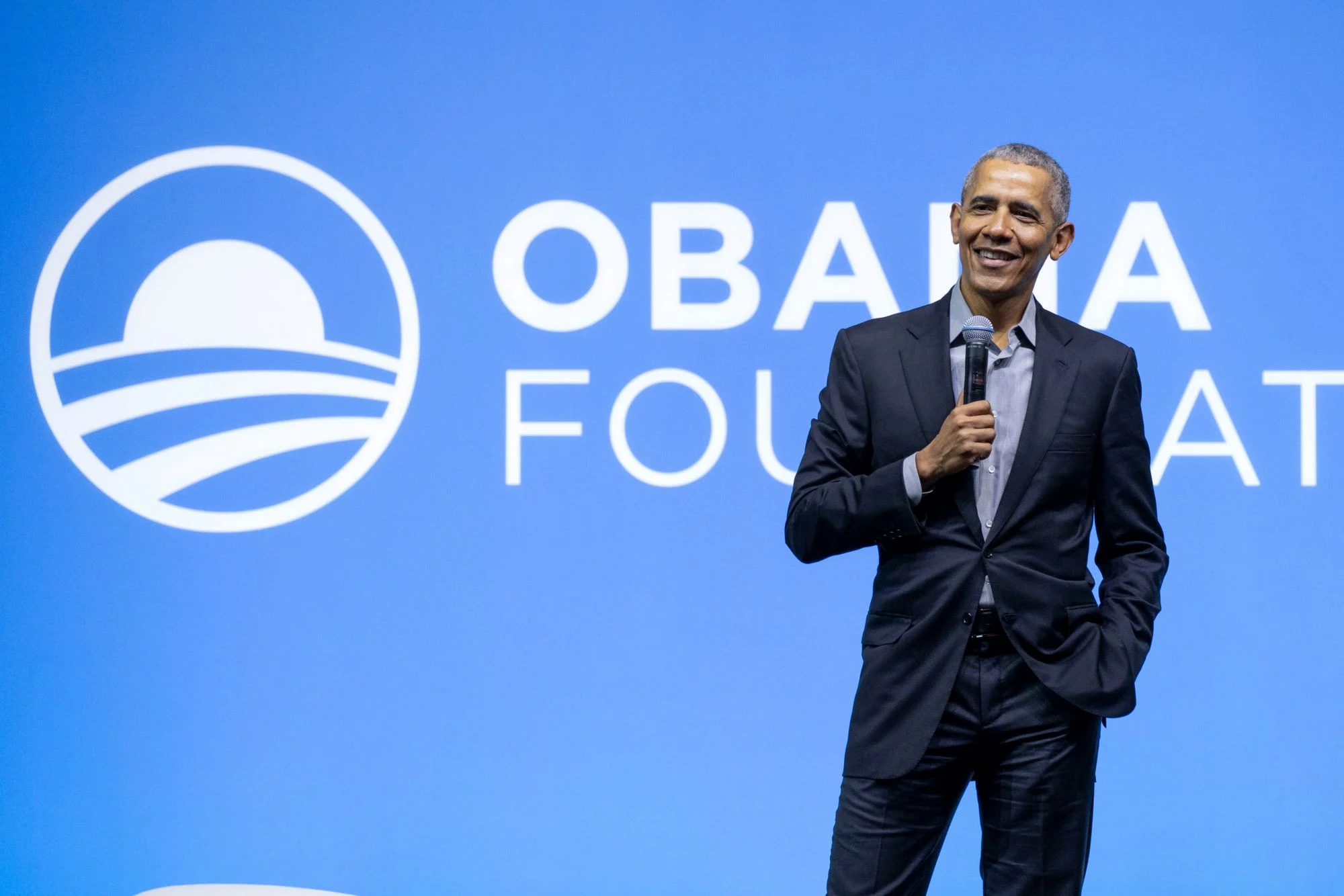
Barack Obama: During the Operation to Kill Osama bin Laden

mistressesanonymous.com – One of the most defining moments of Barack Obama’s presidency came on May 2, 2011, when U.S. Navy SEALs, acting on the orders of the Obama administration, conducted a covert operation that led to the death of Osama bin Laden, the mastermind behind the September 11, 2001 attacks. This historic mission, known as Operation Neptune Spear, marked a turning point in the global fight against terrorism, and Obama’s role in overseeing the operation significantly shaped his legacy as a commander-in-chief.

In this article, we will delve into the events leading up to the mission to kill Osama bin Laden, the key decisions made by President Obama, the execution of the operation itself, and the long-term impact of bin Laden’s death on the U.S. and the world. We will also examine how this mission affected Obama’s presidency and his place in history.

The Hunt for Osama bin Laden: A Decade of Pursuit

The hunt for Osama bin Laden, leader of the terrorist organization al-Qaeda, had been one of the United States’ top priorities for nearly a decade after the September 11 attacks. Bin Laden’s role in orchestrating the deadliest terrorist attack on American soil made him Public Enemy No. 1, and the U.S. government had been working tirelessly to locate and capture or kill him. Following the 9/11 attacks, the U.S. launched the War on Terror, which included military actions in Afghanistan aimed at dismantling al-Qaeda and its allies.

Bin Laden, however, had managed to evade capture for years, despite being one of the most wanted individuals in the world. After the U.S. invasion of Afghanistan in 2001, bin Laden fled to Pakistan and remained hidden in a compound in the city of Abbottabad, located near the Pakistani military academy. The U.S. government, through a combination of intelligence gathering, surveillance, and covert operations, gradually narrowed down his whereabouts.

By the time Barack Obama took office in 2009, the search for bin Laden had become a focal point of U.S. counterterrorism efforts. Despite significant progress in the fight against terrorism, bin Laden’s capture or death remained elusive, and his presence continued to symbolize the ongoing threat posed by al-Qaeda. Obama inherited the responsibility of handling this mission, which would come to define his presidency.

The Obama Administration’s Decision to Act

Once in office, Obama was briefed on the ongoing efforts to locate Osama bin Laden. By early 2011, U.S. intelligence officials had gathered enough evidence to believe that bin Laden was living in a large, fortified compound in Abbottabad. This compound, which was located in a suburban neighborhood, had been under surveillance for months, and the CIA had begun to piece together intelligence that linked it to bin Laden. However, there were still uncertainties about whether bin Laden was indeed there, and the intelligence was not definitive.

In March 2011, Obama convened a series of high-level meetings with his national security team to discuss the intelligence and decide on a course of action. The decision to proceed with the mission was fraught with risks. A failed operation could result in the loss of American lives, diplomatic fallout with Pakistan, and the potential for bin Laden to escape once again. On the other hand, if successful, the mission would bring justice to the victims of 9/11 and deal a major blow to al-Qaeda’s leadership.

After reviewing the evidence and considering the risks, Obama authorized the operation on April 29, 2011, during a meeting of his national security team at the White House Situation Room. Obama and his advisers, including then-CIA Director Leon Panetta, Defense Secretary Robert Gates, Secretary of State Hillary Clinton, and Joint Chiefs Chairman Admiral Mike Mullen, all debated the best approach. Ultimately, they decided to go forward with a daring plan: to send a team of Navy SEALs from SEAL Team 6 into Abbottabad to raid the compound and kill or capture bin Laden.

Key Moments in Obama’s Decision-Making Process:

  • Risk and Reward: Obama carefully weighed the potential consequences of the mission, knowing that failure could result in a major diplomatic crisis, particularly with Pakistan, a crucial U.S. ally in the region.
  • Consulting Experts: Obama relied on the advice of his military and intelligence experts, who assured him that the intelligence on the compound was strong enough to warrant the mission, though there remained some uncertainty.
  • Secrecy and Security: The operation was kept under tight wraps to prevent leaks and ensure the safety of the Navy SEAL team. Only a small circle of advisers knew about the mission before it was carried out.

Once the decision was made, the team moved quickly to prepare for the operation. Obama remained personally involved, staying in close contact with his advisers and receiving regular updates in the Situation Room as the operation unfolded.

Operation Neptune Spear: The Mission to Kill Osama bin Laden

On the night of May 1, 2011, the Navy SEALs embarked on Operation Neptune Spear, which would culminate in the death of one of the world’s most wanted terrorists. The mission was launched from Afghanistan and involved a helicopter assault on the compound in Abbottabad. The operation was carried out under the cover of darkness to minimize the risk of detection and to ensure the safety of the SEAL team.

The compound itself was a large, heavily guarded structure, and the SEAL team faced significant challenges in infiltrating it. Despite encountering unexpected resistance, including the death of a member of the SEAL team, the operation proceeded with precision. Bin Laden was located in a third-floor bedroom of the compound. After confirming his identity, the SEAL team fatally shot him. His body was taken into U.S. custody.

The SEAL team also collected valuable intelligence from the compound, including documents and electronic materials that provided insights into al-Qaeda operations. The mission lasted around 40 minutes, and by the early hours of May 2, bin Laden was dead.

Key Facts About Operation Neptune Spear:

  • Mission Execution: The mission was executed with military precision by Navy SEALs from SEAL Team 6, also known as DEVGRU, who are considered among the most elite special forces in the world.
  • Helicopter Assault: Two helicopters were used to insert the SEAL team into Abbottabad. One helicopter crashed due to a mechanical failure but was destroyed on site to prevent it from being captured.
  • Bin Laden’s Death: Bin Laden was killed in a firefight in his compound. His death marked the end of a decade-long search for the al-Qaeda leader.
  • No U.S. Casualties: Despite the risks, the mission was carried out without any casualties to the U.S. forces involved.

President Obama’s Role During the Operation

During the operation, President Obama remained in the White House Situation Room, closely monitoring the progress of the mission. As the mission unfolded, Obama was regularly updated by his national security team. The decision to carry out the mission was a testament to Obama’s leadership, as he showed great resolve in the face of uncertainty and danger. His calm demeanor during the operation reflected his experience and ability to make critical decisions under pressure.

When the news of bin Laden’s death was confirmed, Obama addressed the nation in a televised speech on the night of May 1, 2011. In his address, Obama confirmed that bin Laden had been killed and that justice had been served for the victims of 9/11. He praised the bravery of the U.S. Navy SEALs and intelligence officers who had made the mission a success, and he stressed that the fight against terrorism would continue.

Key Points in Obama’s Address:

  • Justice for 9/11 Victims: Obama emphasized that bin Laden’s death was a major step in bringing justice to the victims of the September 11 attacks.
  • Ongoing Fight Against Terrorism: Obama made it clear that while bin Laden’s death was a significant victory, the war on terrorism was far from over. He called for continued vigilance and cooperation in the fight against al-Qaeda and other extremist groups.
  • Unity and Resolve: Obama used the moment to bring the country together, urging Americans to remain united in the face of terrorism and to honor the sacrifices made by U.S. military personnel.

The successful operation to kill Osama bin Laden was celebrated across the United States, and Obama’s leadership during the mission was widely praised. However, it also marked a sobering reminder that terrorism and extremism were still global threats requiring ongoing attention.

The Aftermath: Impact and Legacy

The death of Osama bin Laden was a significant moment in the fight against terrorism. For many Americans, it symbolized the fulfillment of a long-awaited promise of justice for those killed in the 9/11 attacks. It also provided a sense of closure for the families who had lost loved ones on that tragic day.

For Obama, the successful operation bolstered his standing as a strong and capable commander-in-chief. The mission not only provided a major national security victory but also solidified Obama’s image as a leader who was willing to make difficult decisions for the good of the country.

However, bin Laden’s death did not signal the end of al-Qaeda or terrorism. While it was a significant blow to the organization, the global threat posed by terrorism persisted. In the years following bin Laden’s death, Obama continued to focus on counterterrorism efforts, including drone strikes and special operations targeting other high-ranking al-Qaeda leaders.

The operation also had political implications. Obama’s approval ratings soared in the wake of bin Laden’s death, and many Democrats pointed to the success of the mission as evidence of Obama’s strong leadership. Conversely, his critics questioned the broader implications of the operation, particularly in relation to U.S. relations with Pakistan and the ongoing challenges in the War on Terror.

Conclusion: Obama’s Legacy as a Commander-in-Chief

The operation to kill Osama bin Laden was a defining moment in Barack Obama’s presidency. His leadership, decision-making, and calm resolve during the mission not only resulted in the death of the world’s most wanted terrorist but also reinforced his legacy as a strong and decisive commander-in-chief. The success of Operation Neptune Spear was a testament to the dedication and sacrifices of U.S. military and intelligence personnel, and it remains one of the most significant achievements in the fight against terrorism in modern history.