
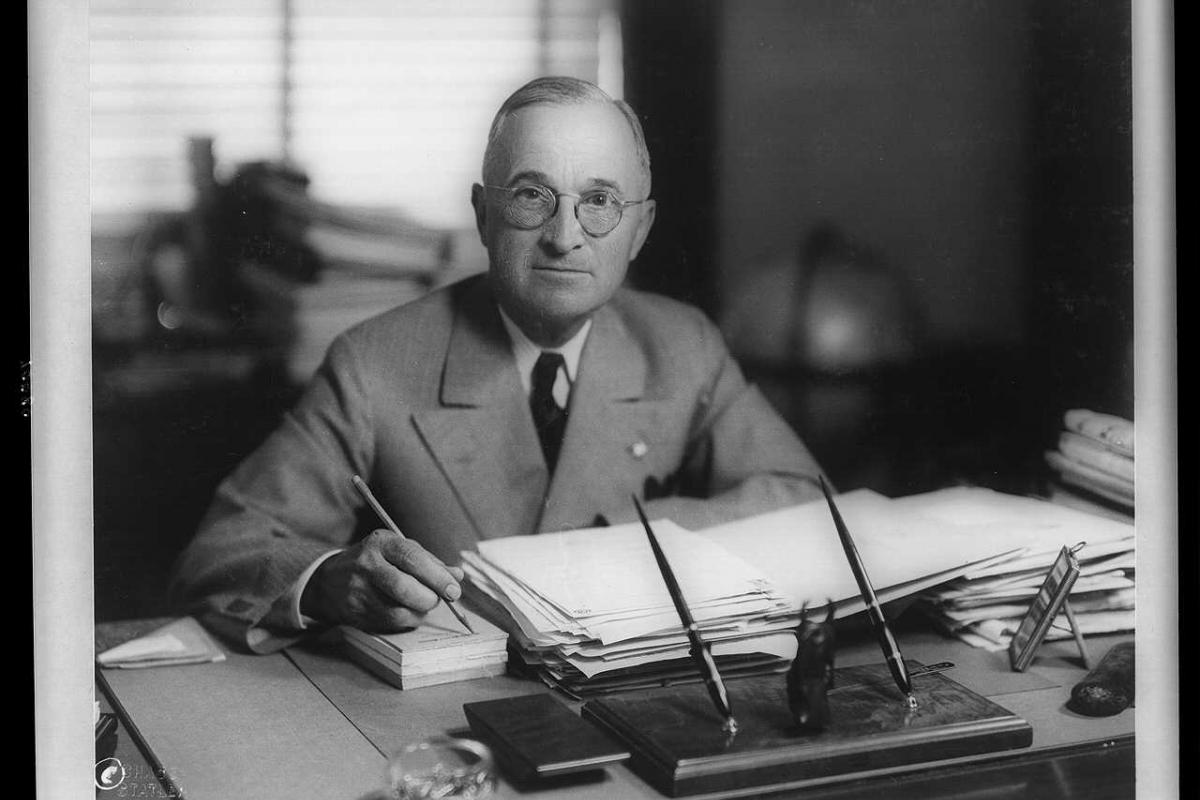
The Truman Doctrine: Containing Communism on the Global Stage

mistressesanonymous.com – In the aftermath of World War II, the world found itself in a new and precarious era. The defeat of the Axis powers was a monumental achievement, but it also left the globe divided into competing spheres of influence—chiefly between the United States and the Soviet Union. As communism spread rapidly across Europe and parts of Asia, U.S. President Harry S. Truman recognized that a clear and decisive foreign policy would be needed to prevent the further spread of communism. The result was the Truman Doctrine, one of the most significant and defining strategies in the early stages of the Cold War.

The Truman Doctrine set the tone for U.S. foreign policy for decades, marking a decisive shift from isolationism to global involvement. In this article, we will examine what the Truman Doctrine was, why it was so important, and how it shaped the geopolitical landscape of the 20th century.

The Roots of the Truman Doctrine

The Truman Doctrine was officially announced on March 12, 1947, in a speech by President Truman before a joint session of Congress. But the seeds of this doctrine were sown long before that day. By the end of World War II, the Soviet Union, under the leadership of Joseph Stalin, had emerged as one of the two dominant superpowers alongside the United States. Stalin’s expansionist policies, which saw communist governments established in Eastern Europe and his aggressive push for influence in other parts of the world, alarmed U.S. officials and leaders.

One of the most pressing crises occurred in Greece and Turkey, two countries struggling to recover from the devastation of World War II. Both nations were facing internal communist uprisings, backed by the Soviet Union. The threat of communism spreading to these strategically important nations could have changed the balance of power in Europe and beyond.

Truman’s administration was convinced that if communism spread to Greece and Turkey, it would set a dangerous precedent that could inspire similar movements in other nations, particularly in Western Europe. The United States could not afford to let the Soviet Union expand its influence any further.

The Key Principles of the Truman Doctrine

The Truman Doctrine was rooted in the idea of containment—a strategy aimed at preventing the spread of communism without directly confronting it through military means. Truman outlined this policy of containment in his 1947 speech, where he made clear that the U.S. would support countries that were resisting communist forces, both through economic aid and military assistance.

The core principles of the Truman Doctrine were:

  1. Support for Free Peoples: Truman emphasized the need to help nations that were facing the threat of communist takeover. The United States, as the leader of the democratic free world, had a moral obligation to protect the sovereignty and self-determination of nations fighting against communist oppression.

  2. Economic and Military Aid: Truman argued that the U.S. should provide both financial and military support to countries resisting communism. This aid would not only help stabilize these nations but would also enable them to defend themselves against communist forces without requiring direct U.S. military involvement.

  3. The Global Scope of the Threat: Truman saw the spread of communism not just as a regional issue but as a global threat. His doctrine was not limited to any specific region and established the idea that the U.S. would intervene in the global struggle against communism wherever it arose.

The Truman Doctrine was thus a declaration that the United States would become actively involved in the defense of democracy worldwide, using its resources to help nations at risk of falling under Soviet influence.

The Immediate Impact of the Truman Doctrine

The Truman Doctrine had an immediate and profound impact on U.S. foreign policy. Just days after the speech, Truman requested $400 million in military and economic aid for Greece and Turkey to help them fight off communist insurgents. The U.S. Congress, understanding the gravity of the situation, quickly approved the funds.

Beyond Greece and Turkey, the Truman Doctrine laid the groundwork for U.S. support to other nations in need. It set the stage for U.S. involvement in Europe, where the threat of communism loomed large as many countries were struggling with economic devastation after World War II. This included the establishment of the Marshall Plan, a massive economic aid program designed to help rebuild Western European nations and prevent them from falling under Soviet influence.

The doctrine also had far-reaching consequences in Asia, where countries like China and Korea were caught in the crossfire of the ideological battle between communism and democracy. Truman’s commitment to containing communism extended beyond Europe and into other regions, marking the beginning of U.S. interventionism in the Cold War.

The Long-Term Consequences of the Truman Doctrine

While the Truman Doctrine was successful in containing communism in Greece and Turkey, its long-term effects were even more significant. It marked the beginning of America’s global role in the Cold War, a position the U.S. would maintain for much of the 20th century.

  1. Formation of NATO: The Truman Doctrine helped pave the way for the creation of the North Atlantic Treaty Organization (NATO) in 1949, a military alliance formed to counter the growing Soviet threat in Europe. The formation of NATO signaled that the U.S. was committed to defending not only its own interests but also the security of its European allies.

  2. The Korean War and Beyond: Truman’s doctrine was directly connected to the outbreak of the Korean War in 1950. The U.S. saw the communist North Korean invasion of South Korea as part of a broader Soviet-led effort to expand communism worldwide. The war became a key battleground in the global struggle for influence, and the U.S. led the United Nations forces in support of South Korea.

  3. The Domino Theory: The Truman Doctrine laid the foundation for the domino theory, the idea that if one country in a region fell to communism, neighboring countries would follow. This belief became central to U.S. foreign policy during the Cold War, guiding U.S. interventions in places like Vietnam and Latin America.

  4. Heightened Tensions with the Soviet Union: The Truman Doctrine was a direct challenge to Soviet expansionism, and its implementation only deepened the tensions between the two superpowers. The Cold War became a battle for influence, with the U.S. seeking to contain communism and the Soviet Union seeking to spread it.

Truman’s Legacy: The Architect of Containment

The Truman Doctrine remains one of the most important milestones in U.S. foreign policy. It was a bold statement that the United States would not stand by as communism spread across the globe. Truman’s doctrine was not just about protecting specific countries, but about asserting the U.S. as the leader of the democratic world and making it clear that communism would not be allowed to flourish unchecked.

At mistressesanonymous.com, we recognize that Truman’s decisive actions in the early days of the Cold War set the course for U.S. foreign policy for years to come. His approach to containing communism—through economic aid, military intervention, and diplomatic alliances—was groundbreaking. The Truman Doctrine not only reshaped the global political landscape but also established the U.S. as a key player in shaping the course of history during the 20th century.

Harry S. Truman’s legacy is defined by his willingness to take bold action in the face of an uncertain and dangerous world. The Truman Doctrine remains a critical example of leadership during a time of unprecedented global tension, and its principles continue to influence U.S. foreign policy today.

Jackson Wang: A Global Superstar and Multi-Talented Artist

mistressesanonymous.comJackson Wang, born on March 28, 1994, in Hong Kong, is a globally renowned singer, rapper, dancer, and entrepreneur. Known for his infectious charisma, exceptional work ethic, and wide range of talents, Jackson has risen to fame as one of the most successful and influential Asian artists on the global stage. He first gained popularity as a member of the K-pop group GOT7 but has since built an impressive solo career that transcends language and cultural boundaries.

Family and Athletic Beginnings

Born into a family deeply involved in sports, Jackson’s early life was shaped by his parents’ influence. His father, Wang Ruiji, was a former member of China’s national fencing team and an Asian Games gold medalist, while his mother, Sophia Chow, was a former world champion gymnast. With such a strong athletic pedigree, Jackson’s childhood was focused on sports and competition, particularly fencing.

Under the guidance of his father, Jackson took up fencing at a young age and quickly excelled. He became a member of Hong Kong’s junior fencing team and won several awards in international competitions, even ranking as one of the top fencers in Asia in his age category. However, despite his success in fencing, Jackson had another passion: music and performing arts.

A Life-Changing Decision: Pursuing Music

At the age of 17, Jackson made a pivotal decision that would change the course of his life. In 2011, he was scouted by JYP Entertainment, a major South Korean entertainment company, and offered the opportunity to pursue a career in music. After much deliberation, Jackson chose to leave behind his promising fencing career and move to South Korea to train as a K-pop idol. This decision was not easy, as it meant leaving his family and home behind to start a new chapter in a foreign country.

Jackson’s decision to pursue music was driven by his love for performing and his desire to challenge himself in a new field. His strong sense of determination and discipline, cultivated during his years as an athlete, helped him navigate the demanding and rigorous training system in the K-pop industry.

Rise to Fame: GOT7 Debut and Success

In 2014, after two and a half years of intense training, Jackson debuted as a member of GOT7, a seven-member boy group under JYP Entertainment. GOT7 quickly gained popularity for their powerful performances, unique sound, and charismatic personalities. Jackson, with his outgoing and energetic nature, became one of the group’s most recognizable members.

GOT7’s Impact on the K-pop Scene

GOT7’s debut single “Girls Girls Girls” showcased the group’s dynamic style, blending hip-hop, R&B, and pop influences. Over the years, GOT7 released a series of successful albums and singles, including “Just Right,” “If You Do,” and “You Are,” solidifying their place as one of the top K-pop groups of the time.

Jackson’s presence in GOT7 was distinctive. He stood out for his rapping, dancing, and comedic personality, often becoming the group’s representative in variety shows and interviews. His fluency in multiple languages, including Mandarin, Cantonese, Korean, and English, made him a valuable asset in reaching international fans, and his charm resonated with audiences worldwide.

Expanding His Presence: Variety Shows and Public Image

Outside of his work with GOT7, Jackson became a highly sought-after personality in the South Korean entertainment industry. His lively and humorous personality made him a frequent guest on Korean variety shows such as “Roommate,” “Running Man,” and “Law of the Jungle.” His appearances on these shows further boosted his popularity, as viewers were drawn to his down-to-earth attitude and his willingness to go all out for the sake of entertainment.

Jackson’s ability to connect with audiences on a personal level, combined with his athletic background and natural talent, helped him build a strong fan base, both within Korea and internationally.

Solo Career and Global Success

While Jackson continued to be an active member of GOT7, he also embarked on a solo career, pursuing music and projects outside the group. His solo endeavors allowed him to explore his creative vision and showcase his unique identity as an artist.

Team Wang: Establishing His Own Brand

In 2017, Jackson took a bold step by launching his own label and production company, Team Wang, with the goal of creating music and content that reflected his artistic vision. This move allowed him to take full control of his solo career and expand his influence beyond the K-pop industry. Team Wang represents Jackson’s entrepreneurial spirit and his desire to break barriers, both musically and culturally.

As an independent artist, Jackson released a series of hit singles, starting with “Papillon” in 2017. “Papillon” marked a major turning point in his career, as it was his first solo single entirely in English. The song was a commercial success and demonstrated Jackson’s ability to cross over into the global music market. Its mix of rap and trap influences highlighted his versatility as an artist.

Continuing His Solo Music Journey

Following the success of “Papillon,” Jackson continued to release solo singles that gained significant attention internationally. Songs like “Okay,” “Dawn of Us,” and “Fendiman” further cemented his reputation as a solo artist capable of delivering music that resonates with fans across different genres and languages.

In 2019, Jackson released his first full-length solo album, “Mirrors,” which showcased his growth as an artist and his diverse musical influences. The album featured a mix of R&B, hip-hop, and pop tracks, and it received positive reviews from fans and critics alike. “Mirrors” debuted at No. 32 on the Billboard 200 chart, making Jackson the highest-charting Chinese solo artist on the Billboard charts at that time.

Global Collaborations and Recognition

Jackson’s talent and international appeal have led to numerous collaborations with artists from around the world. He has worked with prominent figures in the music industry, such as Gucci Mane, GoldLink, and Swae Lee, further establishing his presence in the global music scene. His collaboration with Galantis on the single “Pretty Please” in 2020 was another successful endeavor that showcased his ability to merge different styles and genres.

Jackson has also gained recognition for his fashion sense and has been featured in major campaigns for luxury brands like Fendi and Cartier. His influence in the fashion world has made him a global ambassador for various high-profile brands, solidifying his status as a style icon.

Acting and Other Ventures

In addition to his music career, Jackson has expanded his portfolio by venturing into acting and other creative fields. He has expressed interest in acting in both Chinese and international films, and fans are eagerly awaiting his future projects in the entertainment industry. Jackson’s multi-talented nature has also led him to host and produce various shows, where he continues to showcase his dynamic personality.

Entrepreneurship: Building the Team Wang Brand

Beyond his work in entertainment, Jackson’s entrepreneurial pursuits have been highly successful. Under the Team Wang label, he has expanded into fashion, launching Team Wang Design, a streetwear brand that combines urban aesthetics with his personal style. His entrepreneurial ventures have further cemented his status as a business-savvy celebrity who has a keen understanding of the global market.

Personal Life and Philosophy

Jackson Wang’s success is not only attributed to his talent but also to his relentless work ethic and positive mindset. He is known for his dedication to his craft, often describing himself as a workaholic who strives for perfection in everything he does. His personal motto, “Know yourself, make history,” reflects his belief in self-awareness, growth, and leaving a lasting legacy.

Despite his fame, Jackson remains humble and often speaks about the importance of family, hard work, and staying true to oneself. His close relationship with his parents, especially his father, has been a significant source of inspiration throughout his career.

Overcoming Challenges

Jackson has faced numerous challenges throughout his career, including the pressures of fame, the demands of being a global star, and the physical and mental toll of constant travel and performing. However, he has been open about these struggles, often sharing his journey with fans and encouraging them to pursue their dreams with resilience and determination.

Impact and Legacy

Jackson Wang’s influence reaches far beyond the entertainment industry. As an Asian artist who has successfully crossed over into the Western music scene, he has played a key role in breaking down cultural barriers and promoting diversity in the global entertainment landscape. His ability to connect with fans from all over the world, regardless of language or nationality, is a testament to his universal appeal.

Cultural Ambassador

As a global ambassador for Chinese culture, Jackson has made it his mission to bridge the gap between East and West through his work. He often incorporates elements of Chinese culture into his music, fashion, and public persona, helping to introduce Chinese traditions and values to a broader audience.

Conclusion

Jackson Wang’s rise from a talented athlete to a global superstar is an inspiring story of perseverance, passion, and creativity. With his numerous achievements in music, fashion, entrepreneurship, and entertainment, he has proven himself to be a versatile and influential figure in the global entertainment industry. As Jackson continues to evolve as an artist and entrepreneur, his impact on the world stage is sure to grow, making him one of the most dynamic and exciting talents of his generation.

Singapore’s Economic Miracle: Colonial Outpost – Global Hub

mistressesanonymous.com – Singapore’s transformation from a colonial outpost to a global economic powerhouse is a tale of strategic planning, political stability, and economic foresight. This article delves into the key factors that propelled Singapore’s economic miracle, highlighting the policies, leadership, and global positioning that have made it a model for development.

The Colonial Era: A Humble Beginning

Singapore’s journey began in the early 19th century when it was established as a trading post by the British East India Company. The island’s strategic location made it an ideal port, attracting traders from across Asia. However, its economy was primarily driven by entrepôt trade, and it lacked industrial development.

Independence and the Challenges Ahead

In 1965, Singapore gained independence from Malaysia. The new nation faced daunting challenges, including a lack of natural resources, high unemployment, and ethnic tensions. The government, led by Prime Minister Lee Kuan Yew, recognized that economic development was crucial for survival.

Economic Strategies for Growth

1. Investment in Human Capital

The Singaporean government prioritized education and vocational training to equip its workforce with the skills needed for a modern economy. This investment in human capital laid the foundation for future industrial development.

2. Attracting Foreign Investment

To kickstart industrialization, Singapore offered tax incentives and a stable business environment to attract multinational corporations. These companies brought in capital, technology, and management expertise, which were instrumental in developing key sectors such as manufacturing and finance.

3. Infrastructure Development

Recognizing the importance of connectivity, Singapore invested heavily in infrastructure, including port facilities, airports, and telecommunications. This made Singapore an attractive hub for trade and logistics.

The Rise of a Global Hub

By the late 20th century, Singapore had transformed into a global financial center and a key player in international trade. Its strategic location, coupled with a business-friendly environment, made it an ideal gateway to Asia for many multinational corporations.

Challenges and Adaptations

Despite its success, Singapore faced new challenges, including rising labor costs and competition from neighboring countries. To maintain its edge, Singapore diversified its economy, focusing on high-tech industries, biotechnology, and the digital economy.

Conclusion

Singapore’s economic miracle is a testament to the power of strategic planning, leadership, and adaptability. By leveraging its strengths and overcoming challenges, Singapore has established itself as a global hub that continues to inspire other nations on the path to development.