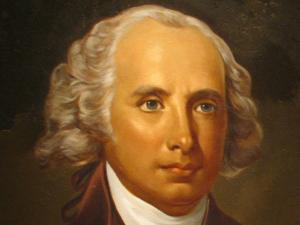
mistressesanonymous.com – James Madison, the fourth president of the United States, is often remembered as the “Father of the Constitution” for his pivotal role in drafting and promoting the U.S. Constitution. However, his political journey was not confined to his contributions at the Constitutional Convention—Madison’s life was marked by an enduring commitment to the principles of republicanism, individual liberties, and democratic governance. From his early years as a young political thinker to his tenure as president, Madison’s political journey reflects the evolution of the American nation itself, as he navigated the challenges of creating a new government, defending it, and leading it through turbulent times.
Madison’s political career spanned over five decades, during which he helped shape the nation’s political system, witnessed the growth of American democracy, and led the country during the War of 1812. His journey from constitutional theorist to president encapsulates the transition of the U.S. from its inception to a nation on the global stage. This article explores Madison’s political evolution, highlighting his contributions to the Constitution, his role in the early Republic, his presidency, and his lasting impact on the United States.
Early Life and Intellectual Development
James Madison was born on March 16, 1751, in Port Conway, Virginia, to a wealthy plantation family. The young Madison was frail and often in poor health, but his physical limitations were balanced by his intellectual vigor. He attended the College of New Jersey (now Princeton University) in 1769, where he studied a wide range of subjects, including history, philosophy, and political theory. Madison’s exposure to Enlightenment thinkers such as John Locke, Montesquieu, and Rousseau had a profound influence on his political thinking, especially their ideas on the nature of government and the importance of individual rights.
The Enlightenment ideals of reason, liberty, and the social contract resonated deeply with Madison, and he became increasingly concerned with the weaknesses of the Articles of Confederation, which governed the United States after independence. The Articles established a loose confederation of states with a weak central government that lacked the authority to regulate trade, raise taxes, or provide for the nation’s defense. Madison believed that the United States needed a stronger and more effective national government to survive and thrive.
The Constitutional Convention: Shaping the Nation’s Founding Document
Madison’s intellectual journey reached its pinnacle in 1787 when he played a central role in the Constitutional Convention. The weaknesses of the Articles of Confederation had become increasingly evident, and in response, the states convened a convention in Philadelphia to address the country’s problems. Madison was a key delegate from Virginia, and he quickly emerged as one of the most influential figures in the Convention.
Madison’s vision for the new government was grounded in the principles of republicanism and the protection of individual rights. He recognized that the Articles had created a government that was too weak to address the nation’s problems, and he believed that a stronger federal government was necessary to preserve the union. Madison was particularly concerned with the issue of representation, and he presented the Virginia Plan, which proposed a national government with a bicameral legislature based on proportional representation. This plan would give larger states more influence in the legislative process, a point of contention that led to compromises with smaller states.
Madison’s ideas were instrumental in shaping the final document, though not all of his proposals were adopted. The resulting Constitution created a strong central government with the authority to regulate commerce, maintain a military, and engage in foreign relations. It also included a system of checks and balances and separation of powers to prevent any one branch from becoming too powerful. While Madison was deeply committed to a strong federal government, he also believed in the protection of individual rights, and his contributions would later inform the creation of the Bill of Rights.
The Federalist Papers: Advocating for Ratification
Following the Constitutional Convention, Madison’s role as a political leader continued to evolve. The newly proposed Constitution required ratification by the states, and it faced strong opposition from those who feared that the central government would become too powerful and undermine states’ rights. To address these concerns, Madison joined forces with Alexander Hamilton and John Jay to write a series of essays that came to be known as the Federalist Papers. These essays, published in newspapers across the states, argued in favor of ratifying the Constitution and explained the rationale behind its provisions.
Madison wrote 29 of the 85 essays, including some of the most influential ones, such as Federalist No. 10 and Federalist No. 51. In Federalist No. 10, Madison argued that a large republic could prevent any one faction from gaining too much power, thus safeguarding the public good. He explained that a system of representative democracy would dilute the influence of factions and protect the rights of minorities. In Federalist No. 51, he elaborated on the system of checks and balances, explaining that the Constitution’s structure would ensure that no single branch of government could dominate the others. These writings were crucial in securing the Constitution’s ratification, and Madison’s intellectual defense of the document cemented his role as one of its key architects.
The Bill of Rights: Securing Individual Liberties
Although Madison was a strong advocate for the Constitution, he was also concerned with protecting individual rights. The original Constitution, as written, did not contain a Bill of Rights, which left many Americans worried about the potential for government overreach. While Madison initially opposed the idea of a Bill of Rights, arguing that the Constitution’s structure already safeguarded individual freedoms, he eventually came to see its necessity.
In 1789, as a member of the House of Representatives, Madison took the lead in drafting a series of amendments to the Constitution. These amendments would become the Bill of Rights, which was ratified in 1791. The Bill of Rights consists of the first ten amendments, which include protections for freedoms such as speech, religion, and the press, as well as rights related to criminal justice, such as protection against unreasonable searches and seizures. Madison’s role in the creation of the Bill of Rights cemented his reputation as a defender of individual liberty and democratic principles.
Madison’s Role in the Early Republic
After the ratification of the Constitution and the Bill of Rights, Madison continued to play a significant role in shaping the nation’s early political landscape. In 1794, he became a member of the U.S. House of Representatives, where he worked closely with Thomas Jefferson to oppose the policies of the Federalist Party, particularly the financial plan of Alexander Hamilton, which included the creation of a national bank. Madison and Jefferson believed that Hamilton’s policies concentrated too much power in the hands of the federal government and threatened the rights of states and individuals.
Madison’s political philosophy during this period was rooted in a belief in limited government, agrarianism, and the preservation of individual rights. He and Jefferson founded the Democratic-Republican Party, which became the primary opposition to the Federalists. Over time, the two parties represented the major political factions in the United States, with the Federalists advocating for a strong central government and a more industrialized economy, while the Democratic-Republicans supported states’ rights and an agrarian-based economy.
Madison’s political journey was also marked by his diplomatic efforts during his time as Secretary of State under President Thomas Jefferson. Madison helped negotiate the Louisiana Purchase in 1803, which doubled the size of the United States, and played a key role in shaping American foreign policy during a period of heightened tensions with both Britain and France.
The Presidency: Leadership During the War of 1812
In 1808, Madison was elected the fourth president of the United States. His presidency was marked by one of the most challenging periods in American history: the War of 1812. Tensions with Great Britain over issues such as impressment of American sailors and British interference with American trade led to the outbreak of war. Madison, who had long advocated for a strong national defense, faced considerable opposition to the conflict, particularly from Federalists in the Northeast.
The War of 1812 was a difficult and divisive conflict for the United States, and Madison’s leadership was tested as the country struggled to defend itself against British forces. Despite military setbacks and a divided nation, Madison’s perseverance during the war ultimately led to a sense of national pride and unity. The war ended in 1814 with the Treaty of Ghent, which restored the status quo between the United States and Great Britain, but it also contributed to the decline of the Federalist Party, which had opposed the war.
Madison’s presidency also saw the establishment of a more robust federal system, including the rechartering of the national bank and the promotion of internal improvements such as infrastructure development. His leadership during the War of 1812, while controversial at the time, helped define his legacy as a man committed to preserving the sovereignty and security of the United States.
Conclusion: The Enduring Legacy of James Madison
James Madison’s political journey from the drafting of the U.S. Constitution to his presidency reflects his unwavering commitment to the principles of republicanism, limited government, and the protection of individual rights. As a political theorist, Madison helped lay the intellectual foundation for the American system of government, and as a practical leader, he worked tirelessly to bring those ideas to life.
Madison’s role in the formation of the Constitution, the Bill of Rights, and the Federalist Papers shaped the trajectory of the United States in its early years. His leadership during the War of 1812 helped solidify the nation’s independence and national identity. Madison’s political journey is a testament to the power of ideas and action in shaping the course of history, and his legacy continues to influence American political thought and governance today.